This maintenance specification is designed for our 3.5 ton and 5 ton 4WD rough terrain forklifts, including Landtiger series and Pioneer series (integrated rear-steering & front articulated models).
These machines often operate on farms, construction sites, muddy hills and rugged ground under heavy-duty conditions. Proper periodic maintenance can prevent engine issues, hydraulic leakage, 4WD system malfunction and premature parts wear, keep stable working performance and greatly reduce your long-term repair cost.
Besides our own models, this guide is also universally applicable to most mainstream 3.5t & 5t off-road forklifts on the market: T35, T50A, CPC35, CPC50, CPCY35, CPCY50, KDJY35, KDJY50 and similar 4WD forklifts for your daily service.
Part 1: Engine Maintenance (Filters, Oil Filler & Oil Drain Port)
Please refer to the 5 attached pictures for component locations:
Picture 1: Air filter mounting position
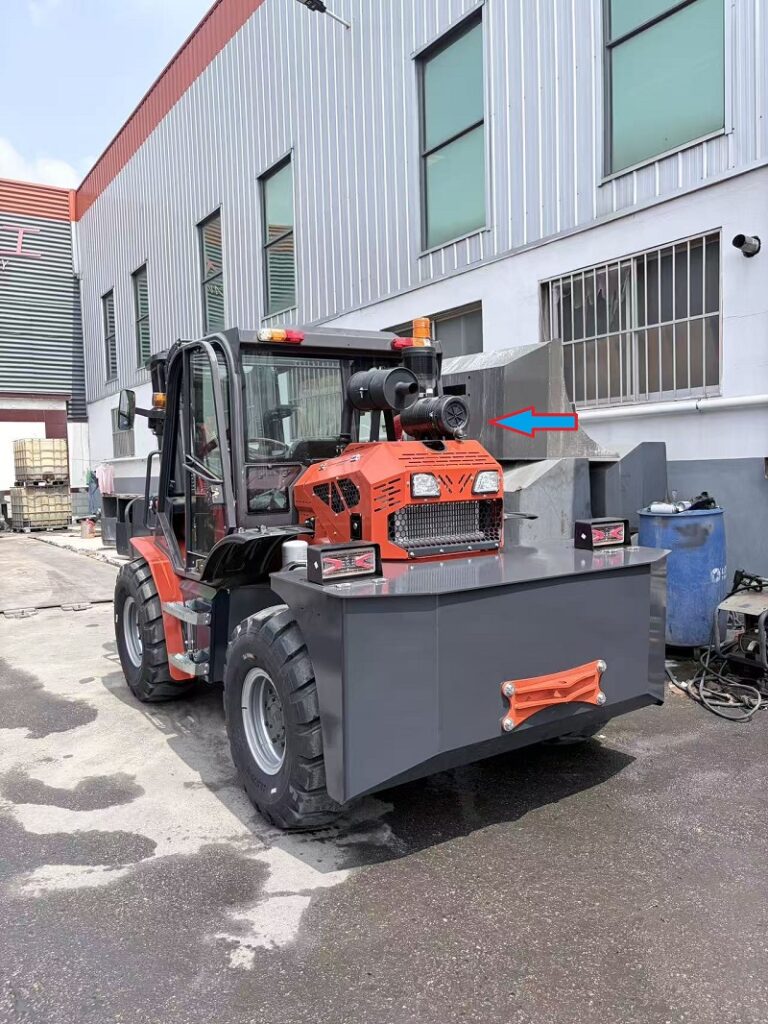
Landtiger Pioneer forklift engine air filter installation position for maintenance
Picture 2: Diesel filter mounting position
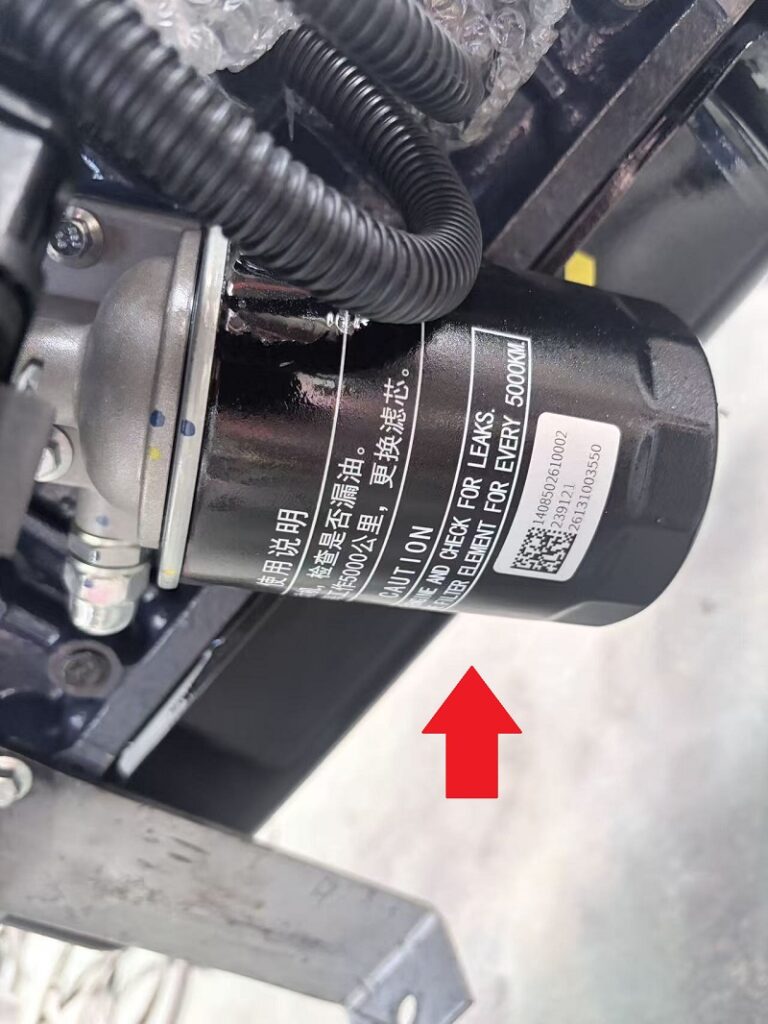
4WD rough terrain forklift diesel filter location replacement guide
Picture 3: Oil filter mounting position
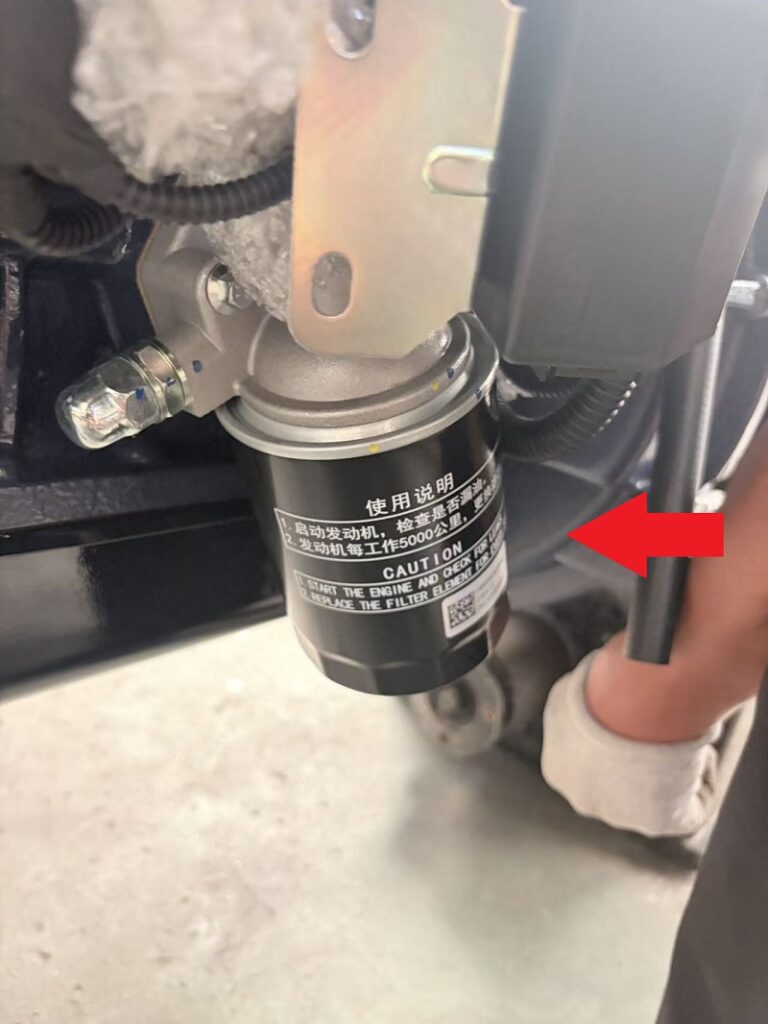
3.5ton 5ton off-road forklift engine oil filter installation position
Picture 4: Engine oil filler port
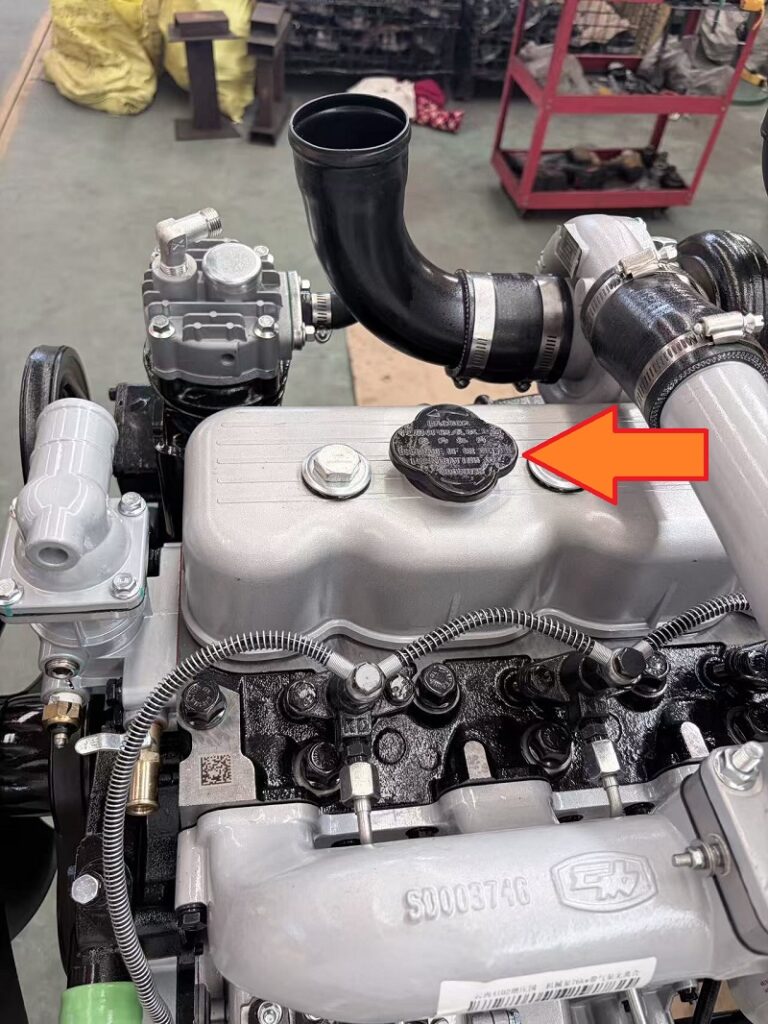
Engine oil filler port of Landtiger Pioneer off-road forklift
Picture 5: Oil sump oil drain port
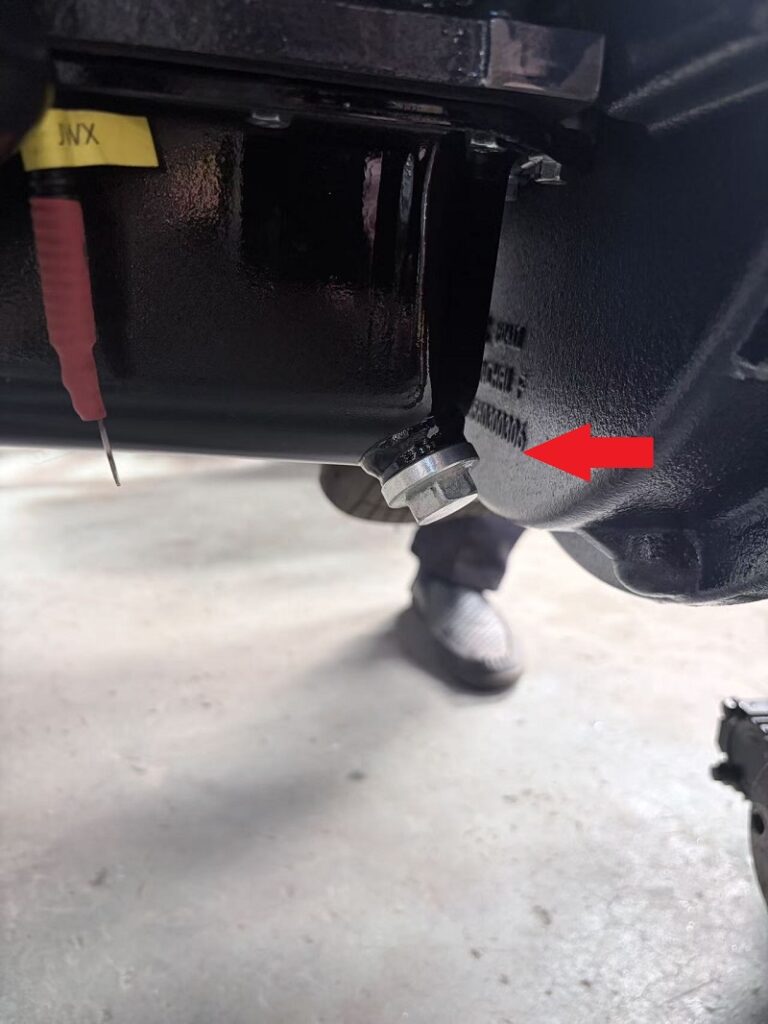
Oil drain port on engine oil sump for forklift oil change
1. Oil Filter & Diesel Filter (See Picture 2 & Picture 3)
For new forklifts, replace the oil filter and diesel filter within the first 100 working hours OR within one month of use, whichever comes first.
Drain old engine oil from the oil drain port on the oil sump (Picture 5).
Add new engine oil through the engine oil filler port (Picture 4).
2. Air Filter (See Picture 1)
If you work in dusty conditions, inspect the air filter after the first 100 working hours. Open and check its cleanliness. Replace it if it is heavily dirty. If it stays clean, you may clean it and reuse it.
Part 2: Gearbox Maintenance
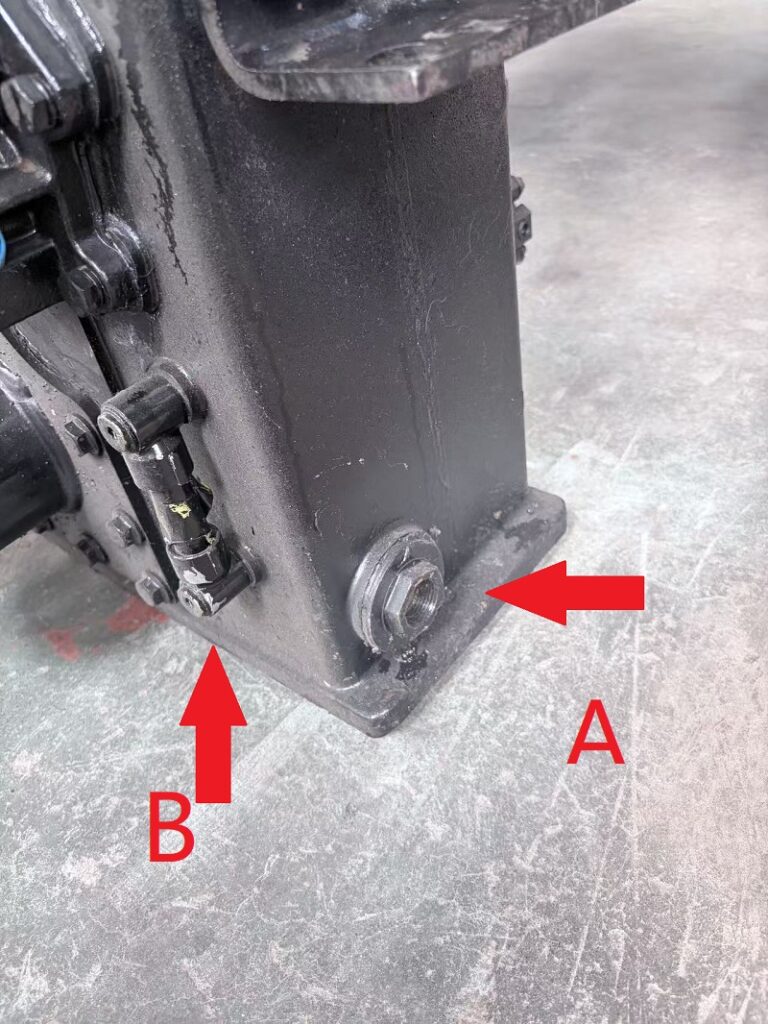
Gearbox drain port A and oil level gauge B position, gearbox oil change guide for Landtiger Pioneer 4WD off-road forklift
Please refer to your gearbox picture for marked port A and port B.
1. New forklift oil change rule
Replace gearbox oil within the first 100 working hours OR within 1 month (whichever reaches first).
For daily long-term use afterwards, change gearbox oil every 300 working hours or every 3 months.
2. Introduction of Port A & Port B on the picture
• Port A: Drain port for gearbox oil. Open it to drain old gearbox oil. Take out the built-in filter inside Port A and clean it thoroughly.
• Port B: Oil level sight gauge (dipstick). While the engine is running, check the oil level here. The oil shall stay at the middle position of the gauge.
3. Gearbox oil filling
The oil filler is located on the top of the gearbox (not marked on this picture). Add new gearbox oil from this top filler port, and check the oil level via Port B at the same time.
Part 3: Hydraulic Oil System Maintenance
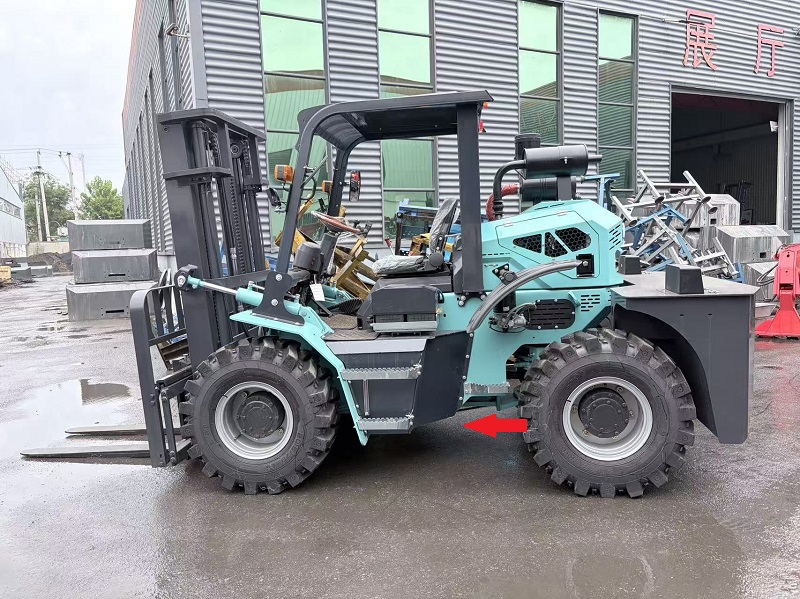
Side hydraulic tank structure, oil drain port and filter cleaning maintenance for 4WD rough terrain forklift
Refer to the hydraulic tank reference picture for installation position.
The hydraulic oil tank is installed on the side of the rough terrain forklift.
The oil outlet and return port are located at the bottom of the hydraulic tank.
When replacing hydraulic oil:
Loosen the bottom pipeline of the hydraulic tank, drain all old hydraulic oil completely, then take out the internal hydraulic filter for thorough cleaning before reinstallation.
Part 4: Drive Axle Gear Oil Maintenance
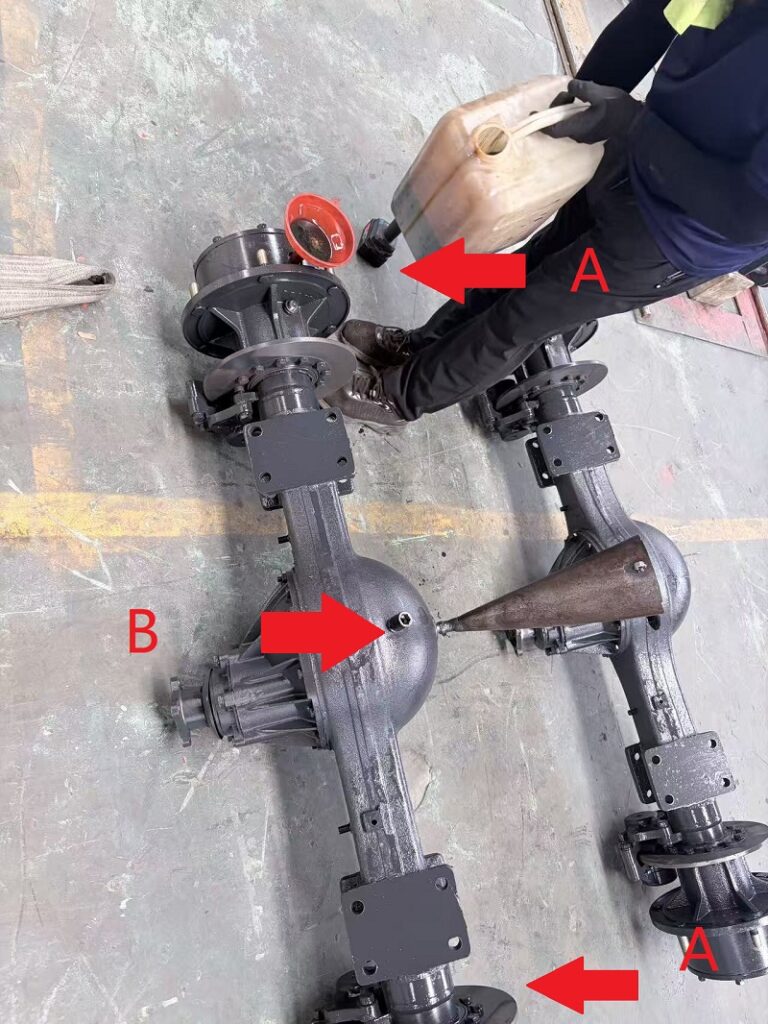
Wheel reduction drive axle gear oil filling ports inspection and maintenance for 4WD rough terrain forklift
Please refer to the drive axle reference picture.
The wheel reduction drive axle is equipped with three gear oil filling ports: one on each side of the wheel hub reducer, and one on the middle axle housing. All positions require regular gear oil filling and inspection.
The replacement cycle of axle gear oil is relatively long.
Check the gear oil condition regularly. Replace the gear oil immediately if water enters the axle or the oil becomes deteriorated, emulsified or dirty. Under normal working conditions, replace the gear oil according to actual usage status.
Part 5: Brake Fluid Maintenance
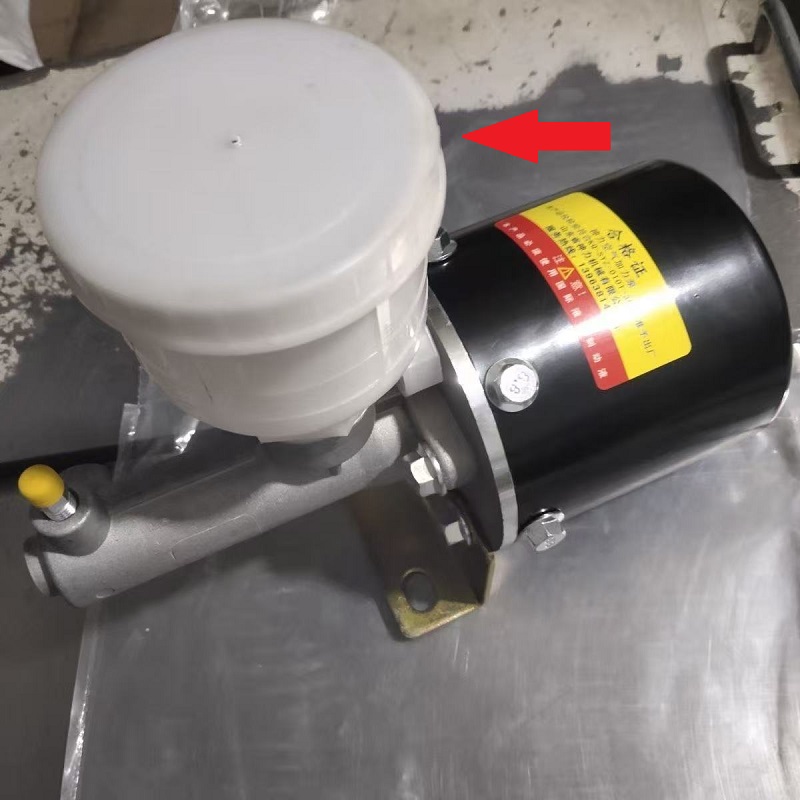
Air booster pump brake fluid tank inspection and replacement maintenance for 4WD rough terrain forklift
Please refer to the air booster pump and brake oil tank picture.
The brake fluid reservoir is installed on the air booster pump.
Open the oil tank cap regularly to check the brake fluid condition.
Inspect whether the brake fluid is deteriorated or contains excessive water.
Replace the brake fluid in time if water content is over standard or the fluid turns deteriorated.
Regular maintenance of engine filters, engine oil, gearbox system, hydraulic system, drive axle gear oil and brake fluid is crucial for 4WD rough terrain forklifts. Following the correct replacement cycle and inspection methods can effectively reduce mechanical failures, maintain stable off-road working performance, and greatly extend the overall service life of the forklift.
Spare Parts for Chinese-Made Rough Terrain Forklifts
For Kaystar forklift owners, always confirm the forklift model, engine model and production configuration before ordering replacement filters. If you are unsure about the correct filter, contact Kaystar with the machine nameplate and engine information.
Chinese-made rough terrain forklifts may use different engines, transmissions, hydraulic pumps, axles and electrical components depending on the manufacturer and configuration. When ordering replacement parts, do not rely only on the forklift tonnage.
- Forklift model
- Serial number
- Engine model
- Transmission model
- Part number
- Old part photos
- Nameplate photos
 English
 Arabic
 French
 Latin
Latin Russian
 Spanish
 Thai
Thai