Hydraulic Pump Data Calculation for Chinese Rough Terrain Forklifts and Wheel Loaders
— A Case Study of a 3.5 Ton 4WD Rough Terrain Forklift
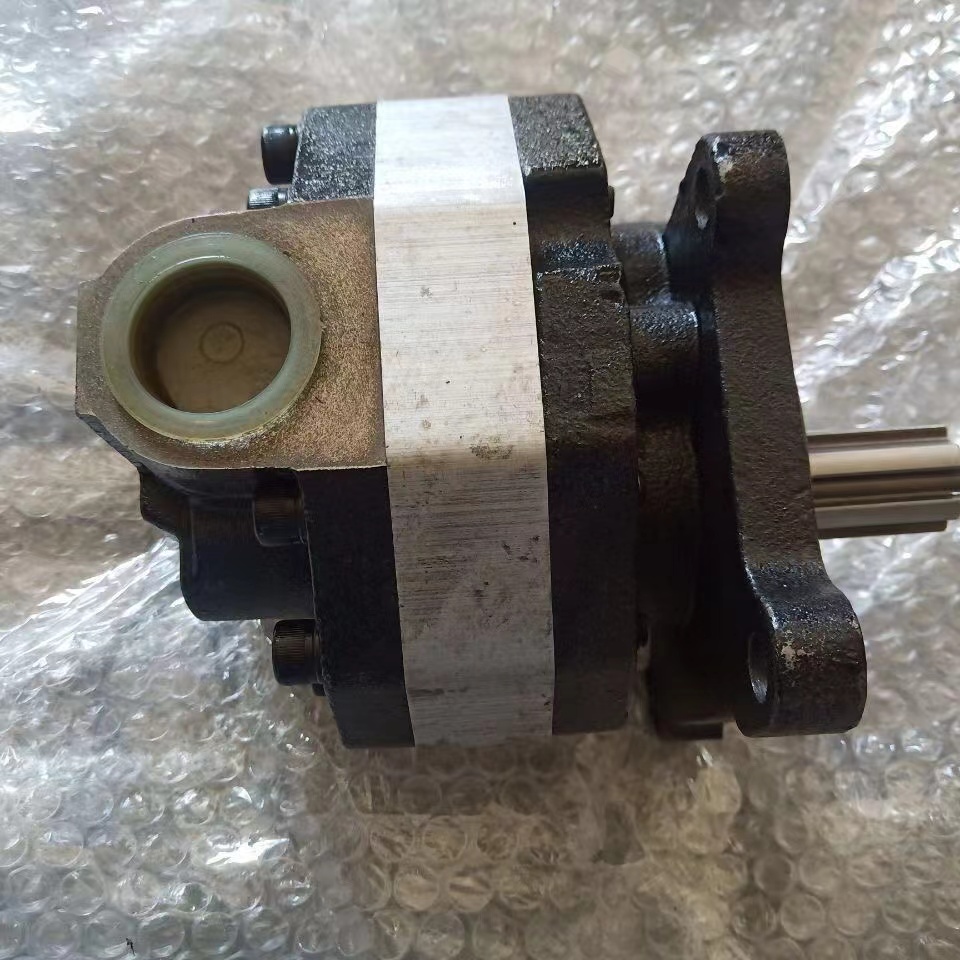 Hydraulic Pump for rough terrain forklifts
In Chinese construction machinery, rough terrain forklifts and wheel loaders commonly use gear pump hydraulic systems as their main source of hydraulic power. The performance of the hydraulic pump directly affects lifting speed, steering response, and attachment operation.
This article takes a 3.5-ton four-wheel-drive rough terrain forklift as an example to explain hydraulic pump configuration, flow rate calculation, and system matching.
1. Powertrain Configuration
The 3.5-ton 4x4 forklift features the following power setup:
- Engine: YUNNEI 490 Turbocharged Diesel Engine
- Rated Power: 58 kW
- Transmission: JINLITE 265
- Drive Type: Full-time 4WD, articulated structure
This power combination is widely used in Chinese off-road forklifts due to its reliability, fuel efficiency, and adaptability to harsh working conditions such as construction sites and farms.
2. Hydraulic System and Pump Options
The hydraulic system provides power for:
- Mast lifting and tilting;
- Hydraulic steering system;
- Auxiliary hydraulic functions (such as bale clamp, bucket, or small crane).
Standard configuration:
- Pump model: 32-type gear pump
- Displacement: 32 ml/r
- Operating speed: 2000 r/min
Optional configurations:
- 50-type gear pump (50 ml/r)
- 80-type gear pump (80 ml/r)
- Dual or triple pump system for independent hydraulic circuits to drive different attachments.
3. Hydraulic Flow Rate Calculation
Theoretical flow rate can be calculated using the formula: Q=q×n1000Q = \frac{q \times n}{1000}Q=1000q×n
Where:
- QQQ: Flow rate (L/min)
- qqq: Displacement (ml/r)
- nnn: Pump speed (r/min)
(1) Standard 32 ml/r pump: Q=32×20001000=64 L/minQ = \frac{32 \times 2000}{1000} = 64\text{ L/min}Q=100032×2000=64 L/min
(2) Optional 50 ml/r pump: Q=50×20001000=100 L/minQ = \frac{50 \times 2000}{1000} = 100\text{ L/min}Q=100050×2000=100 L/min
(3) Optional 80 ml/r pump: Q=80×20001000=160 L/minQ = \frac{80 \times 2000}{1000} = 160\text{ L/min}Q=100080×2000=160 L/min
Thus, the standard 32-type pump provides approximately 64 L/min hydraulic flow, sufficient for normal lifting and steering.
For attachments requiring higher hydraulic power—such as clamps, buckets, or lifting booms—larger displacement pumps or multi-pump systems are recommended.
4. Dual and Triple Pump Systems
For multifunctional forklifts or loaders, dual-pump or triple-pump systems significantly enhance operational coordination and independent control of multiple hydraulic circuits.
| Pump Configuration | Key Features | Typical Application |
|---|
| Single pump (32 ml/r) | Simple, reliable, easy maintenance | Standard lifting and steering |
| Dual pump | Two independent circuits for mast and attachments | Forklifts with clamps, buckets, or cranes |
| Triple pump | Three circuits for simultaneous compound operations | Custom high-performance models with multiple hydraulic tools |
For example, in rough terrain forklifts equipped with a hydraulic clamp or telescopic boom, a dual-pump setup allows smooth steering and simultaneous attachment operation without interference.
5. Comparison with Wheel Loader Hydraulic Systems
Wheel loaders share similar hydraulic principles but require larger displacement pumps due to higher lifting and steering demands.
Typical wheel loader configurations include:
- Single gear pump: 80–120 ml/r
- Dual pump system: Total flow 160–240 L/min
While wheel loaders emphasize high flow output for rapid lifting, rough terrain forklifts prioritize hydraulic efficiency, control precision, and energy balance.
6. Conclusion
From the above analysis of the 3.5-ton 4WD rough terrain forklift hydraulic system:
- The standard 32 ml/r gear pump at 2000 rpm delivers about 64 L/min flow;
- Optional 50 or 80 ml/r pumps can increase flow up to 100–160 L/min;
- Dual or triple pump systems provide independent power circuits for multiple attachments;
- Proper matching of pump displacement, engine power, and hydraulic load ensures stable machine performance and optimal energy efficiency.
This calculation and analysis method is also applicable to wheel loaders, telescopic forklifts, agricultural tractors, and other hydraulic-driven machinery.
 English
 Arabic
 French
 Latin
Latin Russian
 Spanish
 Thai
Thai