The handbrake on a four-wheel-drive off-road forklift plays a crucial role in ensuring safety, especially when the vehicle is parked on uneven terrain. The working principle of the handbrake in our 4x4 rough terrain forklifts is to clamp onto the transmission shaft, preventing it from rotating when the vehicle is not in motion. The handbrake’s braking mechanism is located on the transmission near the engine, as shown in the diagram.
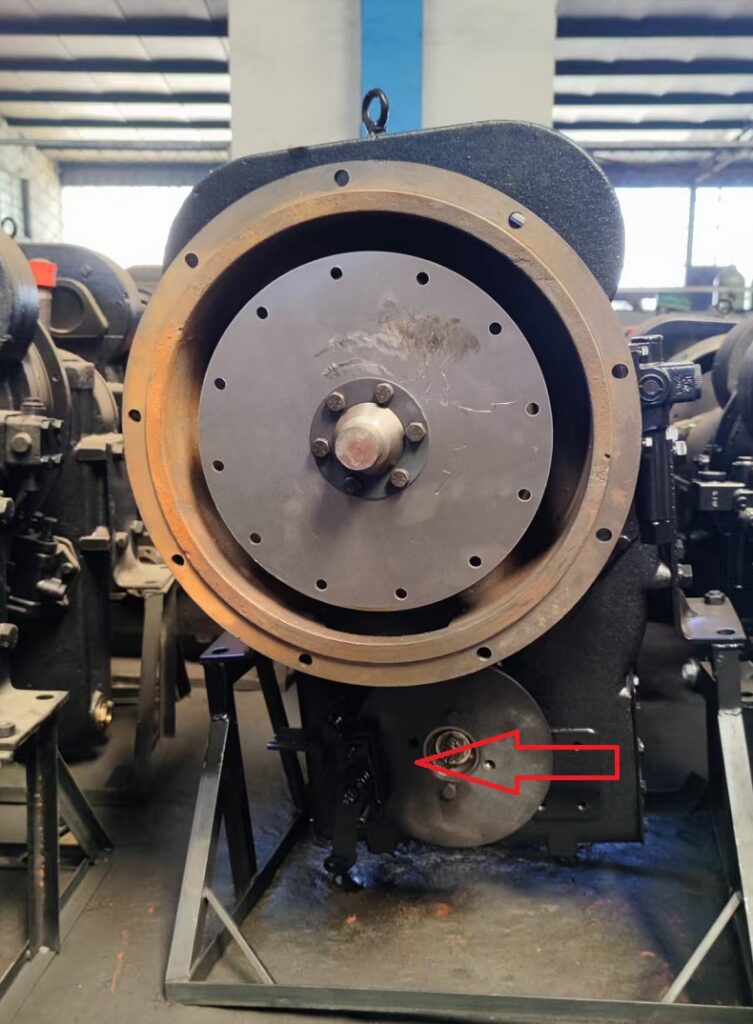 Handbrake of Chinese rough terrain 4x4 forklift
If the handbrake fails to effectively hold the forklift stationary when there is no power, this area should be checked first. A faulty handbrake may be caused by a loose or worn-out brake cable, insufficient brake pad contact, or an issue with the braking assembly.
To ensure optimal braking performance, follow these inspection and adjustment steps:
- Visual Inspection: Check for any visible wear or damage to the brake mechanism. Ensure the brake pads or bands are intact and making proper contact with the transmission shaft.
- Brake Cable Adjustment: If the handbrake feels loose or ineffective, adjust the brake cable tension. Tighten it gradually until the brake engages securely when applied.
- Lubrication and Cleaning: Regularly clean the braking components to prevent dirt buildup, which may reduce effectiveness. Apply appropriate lubrication to moving parts to prevent rust and ensure smooth operation.
- Testing: After making adjustments, test the forklift on a slope to ensure the handbrake can hold the vehicle in place without slipping.
Regular maintenance and timely adjustments can prevent handbrake failures and enhance overall forklift safety. Operators should include handbrake checks in routine forklift inspections to avoid potential hazards during operation.
FAQs for rough terrain forklift
 English
 Arabic
 French
 Latin
Latin Russian
 Spanish
 Thai
Thai